
Breech Baby
How To Get a Breech Baby To Turn
Support your body through the last weeks of pregnancy, alongside your doctor or midwife, while your baby settles into position.
Changing Breech Position
Most babies are breech at some point in pregnancy and turn head-first by around 36–37 weeks. Towards the end of pregnancy, only 3–4 in every 100 babies are still breech. A breech position can change your birth options, and we’re here to give you information and support while you talk through them with your care team.
Our Holistic Approach to Turning a Breech Baby
The third trimester is an exciting time that comes with many of changes that can sometimes be a lot to handle. If your baby is in the breech position you may be wondering about your birth plan and your options are for delivery. We assess your entire situation and work with you to develop a plan to help naturally address your baby’s breech presentation.
How To Turn a Breech Baby Naturally
Moxibustion (moxa), with or without acupuncture, is one option some people add to their prenatal care when a baby is breech. Moxibustion and acupuncture are used in traditional East Asian medicine to support the body’s changes in late pregnancy. They are used alongside, not instead of, your conversation with your doctor or midwife about ECV (external cephalic version, a hands-on procedure to turn the baby head-first) and your birth plan. Your treatment plan may include moxa alone or a combination of acupuncture and moxa.
Acupuncture
Moxibustion

Acupuncture and Moxibustion
Acupuncture and Moxibustion for Breech Baby
In East Asian medicine, the third trimester is described as a shift from yin energy to yang as the pregnancy approaches full term, and treatment aims to support that shift in preparation for labor and delivery. This is the traditional framework we work within, alongside the research summarized below. Pairing acupuncture and moxa is also used to ease other parts of late pregnancy.
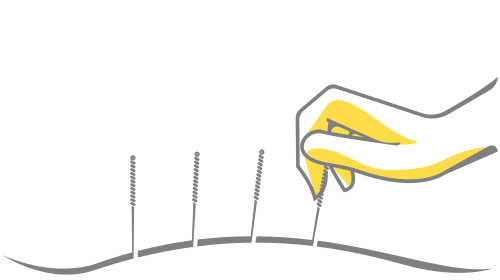
During treatment, patients can expect moxa and acupuncture needles placed on the feet, lower legs, and wrists. We recommend treatments twice per week starting at 34 weeks. In our clinical experience, the sooner you begin treatment after 34 weeks, the better the outcome tends to be, though individual results vary and aren’t guaranteed. Research on moxibustion has mostly looked at weeks 33–35, and your doctor or midwife will usually talk with you about ECV around 36 weeks, so starting conversations early leaves you the most options. Some patients see a change within 1–4 weeks of treatment while others do not.
In one randomized trial of 406 women (Vas et al., 2013), moxibustion at the BL67 point between weeks 33 and 35 was associated with a head-down baby at term in 58.1% of women, compared with 44.8% of women who had usual care alone. That works out to about one additional head-down baby for every 8 women treated, with a wide margin of uncertainty (95% CI: 4 to 72). A larger 2023 review found a smaller average benefit (see the research section below). These are research results, not a promise of what will happen for you.
Moxa for Breech Baby
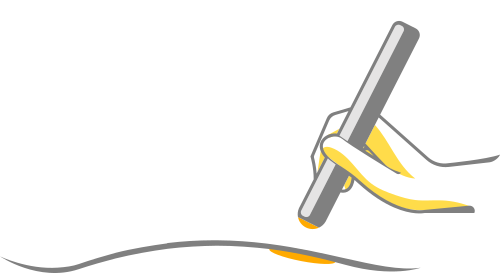
Moxa therapy is the main treatment we use for breech presentation. Our smokeless stick moxa brings a soothing warmth, and in East Asian medicine it is used to support the shift from yin to yang energy described above. Moxa is also used to support circulation and the flow of qi (the traditional framework’s term for vital energy).
During treatment, patients can expect moxa sticks placed near the pinky toes. Timing is the same as described above.
ECV (External Cephalic Version) and Natural Methods: What the Research Says
If your baby is still breech late in pregnancy, ECV is the medical option and it is done by an OB or midwife in a hospital setting. Natural methods like moxibustion are meant to be used alongside the care your whole team provides, including your OB, midwife, doula, and East Asian medicine practitioner. How often does ECV work, and what are the risks? The Royal College of Obstetricians and Gynaecologists (RCOG) tells clinicians that women should be informed the success rate of ECV is approximately 50%, and that few babies revert to breech afterward. ACOG has reported that ECV turns the baby head-first about 58% of the time on average. Results have varied a lot between studies, from as low as 16% to as high as 100%. Your provider will go through the risks with you, which can include preterm labor, rupture of the membranes, bleeding, or an emergency c-section. What does the evidence say about moxibustion? RCOG’s patient information says there is some evidence that burning mugwort (moxibustion) at 33–35 weeks may help your baby turn head-first. Its guideline says women may wish to consider moxibustion at 33–35 weeks under the guidance of a trained practitioner, and reports that cephalic presentation at delivery was higher with moxibustion than with usual care (RR 1.29, 95% CI 1.02–1.64), with no significant change in cesarean delivery rates. A more recent 2023 Cochrane review pooled 7 trials (1,152 women) and found moderate-certainty evidence that moxibustion plus usual care probably reduces the chance of a non-head-down presentation at birth compared with usual care alone (RR 0.87, 95% CI 0.78 to 0.99). It probably makes little to no difference to the cesarean rate, and the evidence on whether it reduces the need for ECV is uncertain. The honest summary: the best current evidence suggests a modest benefit, it hasn’t been shown to change how most babies are born, and it is a supportive option, not a guarantee. Webster technique, Spinning Babies, inversions, and home positions. Some people also try the Webster technique (a chiropractic method), Spinning Babies, or positions such as child’s pose and bridge pose. Spinning Babies is a program created by midwife Gail Tully that uses positions and movements, such as pelvic tilts, side-lying release, and forward-leaning inversion, and aims to give a baby more room to settle into a good position. We haven’t found research showing that it turns breech babies, and RCOG’s guideline says there is insufficient evidence to support postural management for breech presentation. Some of these techniques lower your head below your hips, so please ask your doctor or midwife before trying any of them, and see the FAQ on inversions below.Patient Education Materials
Maintaining Good Health Throughout Your Pregnancy
Quiz – Is My Baby Breech?
Is My Baby Breech?
Frequently Asked Questions
What Is a Breech Baby?
A breech baby is when the feet or buttocks are the closest part to the vagina instead of the baby’s head. If the baby is still in this position around week 37, your doctor may recommend trying to turn the baby through an external cephalic version (ECV) procedure. ECV is an external, hands-on manipulation of your belly that aims to move your baby to a head-first position.
What Percentage of Babies Are Breech?
Towards the end of pregnancy, about 3–4 in 100 babies are breech.
What Causes a Baby To Be Breech?
Sometimes the cause of breech presentation is unknown. Breech baby can be more likely if having twins or multiples, there is a history of premature birth, there is too much or too little amniotic fluid, the placenta is covering part or all of the cervix, the baby is preterm, or if the baby has a birth defect.
How To Avoid Breech Position in Pregnancy
There is no known way to prevent a baby from being breech. Most babies turn on their own, and if yours doesn’t, your doctor or midwife can go over options such as ECV (external cephalic version) and supportive options like moxibustion.
How Do You Know if Your Baby Is Breech?
You may realize your baby is in a breech position due to the movements within the womb. If you feel frequent movement in the lower part of your belly, this may be an indicator of breech position. Tell your doctor where you are feeling movement so they can check the baby’s position. An ultrasound may be used to confirm the position.
How To Tell if Baby Is Breech Without Ultrasound
Movements felt in the lower part of the belly may be an indicator that your baby is in a breech position. If movements are still located in this area around week 37, talk to your doctor.
Where Do You Feel Hiccups if Baby Is Breech?
You may feel your baby’s hiccups higher in your belly if your baby is breech. This can indicate that your baby’s chest is higher than if it were in vertex presentation.
Do Breech Babies Cause More Discomfort?
You will likely not experience more discomfort if your baby is in breech position. However, you may feel movement lower down in your belly.
How To Sleep With a Breech Baby
It is unlikely that sleep position will impact the position of the baby. To give the baby more room to maybe turn, try sleeping on your side with pillows between your legs.
When Do Breech Babies Turn?
Most babies turn head-first on their own by around 36–37 weeks. If your baby is still breech at 36 weeks, your doctor or midwife will go over your options, such as ECV (external cephalic version), moxibustion, a planned cesarean, or a planned vaginal breech birth.
How Late Can Breech Babies Turn?
Breech babies can turn anytime up until birth. There can be a risk of preterm labor or other complications when undergoing the ECV procedure by an OB/GYN or midwife to turn a breech baby, so this procedure is usually performed within close proximity to a hospital or birthing center in the event of a complication.
When To Worry About Baby Being Breech
Talk to your doctor around week 37 if you are worried that your baby may be breech. It is a good idea to check in with your doctor earlier if you are having multiples and/or have a history of preterm labor.
What Happens if Baby Is Breech?
A breech position mainly matters at delivery. If your baby is still breech at 36 weeks, your doctor or midwife will go over your options, which RCOG lists as ECV (external cephalic version), moxibustion, a planned cesarean, and a planned vaginal breech birth. Which are right for you depends on your situation.
What To Do if the Baby Is Breech
Talk with your doctor to discuss all your options, including any changes that may need to be made to your birth plan. In addition to ECV, which is performed in a medical setting, you can try a number of natural remedies, including acupuncture, moxa, getting into child’s pose, and/or bridge pose. Ask your doctor or midwife before trying child’s pose or bridge pose.
How Can I Turn My Breech Baby Naturally?
Some people try moxibustion, and some also try positions like child’s pose. At Transformational Acupuncture we offer moxa, sometimes with acupuncture. None of these replace talking with your doctor or midwife about ECV (external cephalic version).
Does Moxibustion Work for Breech Babies?
The best current evidence suggests a modest benefit. A 2023 Cochrane review found moderate-certainty evidence that moxibustion plus usual care probably reduces the chance of a non-head-down presentation at birth (RR 0.87, 95% CI 0.78 to 0.99), with little to no difference in cesarean rates. RCOG’s patient information says there is some evidence moxibustion at 33–35 weeks may help; it is not guaranteed. Read more about moxibustion at our clinic.
Can Acupuncture Turn a Breech Baby?
Most of the research is on moxibustion, which is what we mainly use, rather than needles alone. The best current evidence suggests a modest benefit, not a guarantee. We offer moxa and acupuncture as supportive care alongside your medical care.
How Does Acupuncture Turn a Breech Baby?
In traditional East Asian medicine, acupuncture is used to support the shift from yin energy to yang energy in late pregnancy, and pairing it with moxa is used to harmonize the energies of the Bladder, Kidney, and Heart. This is the traditional framework we work within. It isn’t a biomedical explanation.
How To Use Moxa Sticks for Breech Baby
We use smokeless moxa sticks for breech baby treatments. Sticks will be placed near the bottom of the feet at the pinky toes.
Can the Webster Technique Help Turn a Breech Baby?
The Webster technique is a chiropractic method some people try. We haven’t reviewed research showing it turns breech babies, so we can’t point to evidence either way. Ask your doctor or midwife before trying it. We refer patients to Noya Chiropractic and Palmer Chiropractic, both of which have practitioners trained in the Webster technique.
Is It Safe To Try Inversions or Other Home Positions?
RCOG’s guideline says there is insufficient evidence to support postural management for breech presentation. We don’t generally recommend inversions without appropriate training. Positions like down dog, handstands, headstands, and shoulder stands should be avoided. However, some Spinning Babies techniques incorporate a slight inversion, and we can teach you how to perform them safely (schedule online). If you’d like to try gentle positions like child’s pose or bridge pose, ask your doctor or midwife first.
What Are the Success Rates and Risks of an ECV (External Cephalic Version)?
RCOG says women should be told ECV works in approximately 50% of attempts, and ACOG has reported an average of 58%. Possible risks include preterm labor, rupture of the membranes, bleeding, or an emergency c-section, which is why ECV is done where cesarean delivery is available. Talk with your OB or midwife about whether ECV is right for you.
What Are the Risks of Turning a Breech Baby?
Turning a breech baby using ECV can result in preterm labor, premature rupture of amniotic sac, blood loss, or an emergency c-section. The procedure is performed by an OB/GYN or midwife and within close proximity to a hospital or birthing center in the event of a complication.
How Do I Know if My Breech Baby Has Turned?
You may feel the larger movements of the feet higher up in your belly if the turn is successful. If undergoing ECV, your doctor may also show you an ultrasound to show the position.
Why Are Breech Births Dangerous?
Most breech babies are healthy and don’t have problems after birth. A breech position can make delivery more complex, which is why your care team will talk with you about your options. Ask your doctor or midwife what is safest for you.
Can You Deliver a Breech Baby?
How a breech baby is delivered depends on your health, your baby’s position, and what your hospital offers. Talk with your doctor or midwife about a planned cesarean or a planned vaginal breech birth. Labor starts the same way whether a baby is head-first or breech.
George Washington University Hospital in DC has a Vaginal Breech Initiative (VBI). It is a program created to increase access to, and training in, vaginal breech delivery. It is led by a collaborative care team of physicians and nurse-midwives.
The VBI uses:
- Thorough prenatal screening
- Strict eligibility criteria, including the baby’s position and estimated size
- Rigorous informed consent
- Established delivery guidelines
- Regular simulation training
Because the criteria are strict, not everyone qualifies. A published review of the program’s first six years found that 34 of 47 women who attempted a vaginal breech birth delivered vaginally.
Availability can change. Contact GW’s OB-GYN or midwifery team to ask whether they are still offering the VBI and whether you may qualify.
Are Breech Babies Healthy?
Most breech babies are healthy and don’t have problems after birth. Ask your doctor or midwife about any concerns specific to your pregnancy or your baby.
Are Breech Babies More Intelligent?
There is no evidence that breech babies are more intelligent than other babies.
What To Expect
You can expect to find a partner in your health journey.
At Transformational Acupuncture, we strive to provide a welcoming environment to each and every patient. We understand traditional healthcare can make some wary of seeking help, even if it’s for the betterment of their health. That’s why we take a holistic approach when treating each person. You will be listened to, treated with respect, and be seen as a true partner in your own health journey.
At the beginning of your treatment you’ll be asked some basic questions so we can establish a good baseline. From there we’ll discuss your specific needs and issues. After hearing from you, we’ll create a holistic plan that is designed to help you live the balanced, healthy life you deserve.
Your Patient Journey
At the beginning of your treatment, you’ll be asked some basic questions so we can establish a good baseline. From there we will discuss your specific needs and issues. After hearing from you, we will create a holistic plan that is designed to help you live the balanced, healthy life you deserve.
Learn more about your complete patient journey.
Get Started Today
Begin your holistic health journey by scheduling an appointment today. Schedule online or give us a call at (202) 297-7404.
To learn if your insurance covers acupuncture and other treatments, please fill out our short form to verify your benefits with us.
Clients Love Our