
Some days I wake up in the morning dreading the current timeline . . . Wednesday, February 11th was not that day.
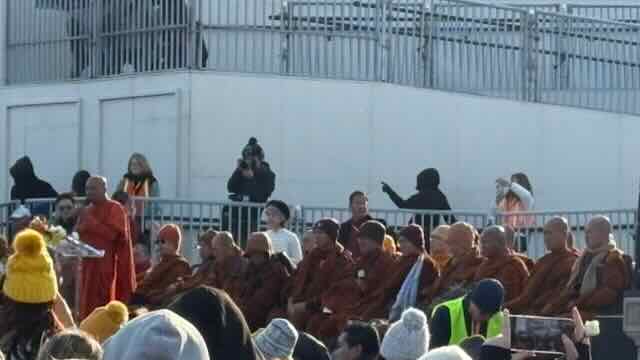
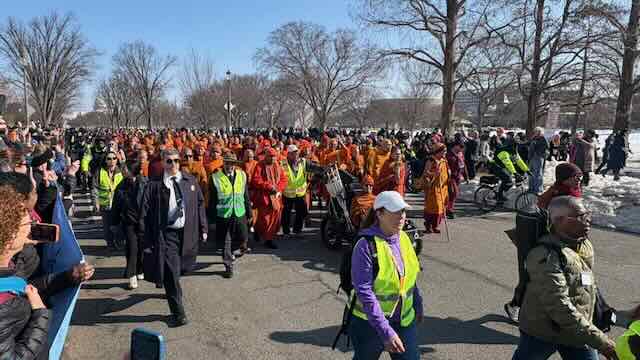
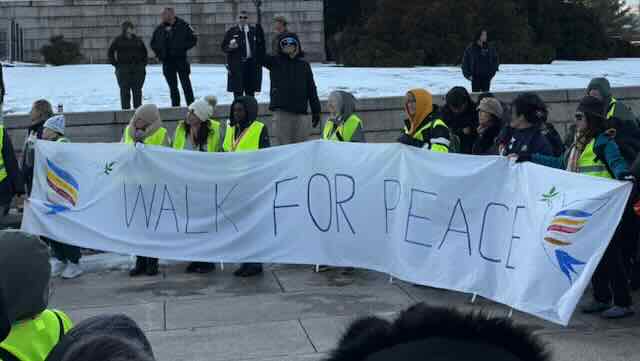
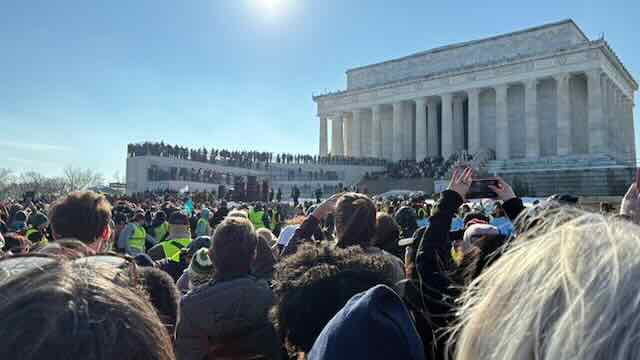
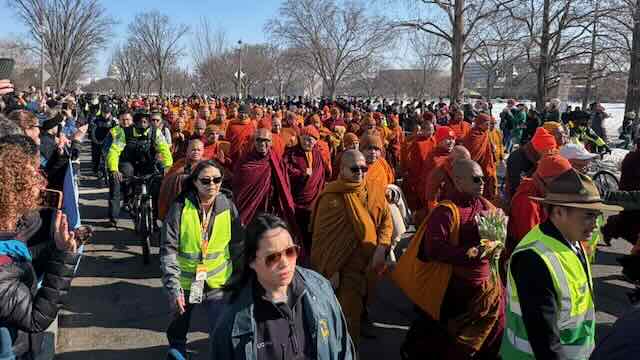
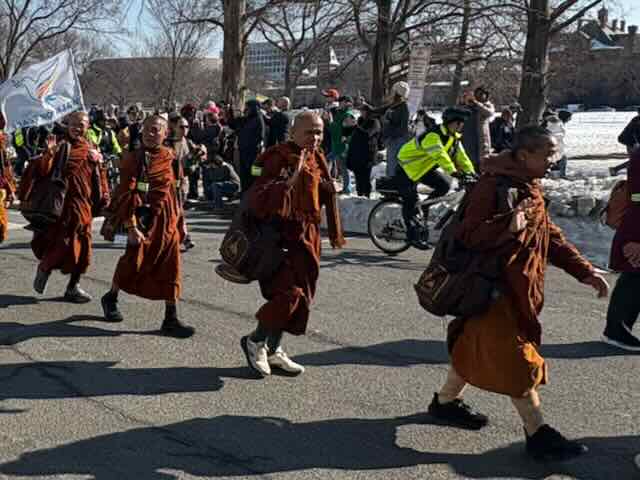
The Walk for Peace was a 2,300 mile pilgrimage of two dozen venerable monks of the Hương Đạo Vipassana Bhavana Center in Fort Worth, Texas. The goal of the pilgrimage was to promote peace, compassion, and nonviolence. The monks began their journey on October 26, 2025 and arrived in Washington, DC on February 10, 2026 after 108 days. The final leg of their pilgrimage was from Capitol Hill to the Lincoln Memorial where they held a Peace Gathering and Concluding Ceremony.
I have been following the Walk for Peace for several months and planned to attend events they were hosting in Washington, DC. Keeping up on their arrival date has been challenging. However, when I learned over the weekend that the venerable monks performing this sacred duty would be arriving this week . . . I cleared my Wednesday schedule to participate in the walk and rally.
I shared with friends that I was planning to attend the Walk for Peace and their aligned events, and at least two members of my church attended events on Tuesday and Wednesday. I even bumped into one of our patients while waiting to join the march.
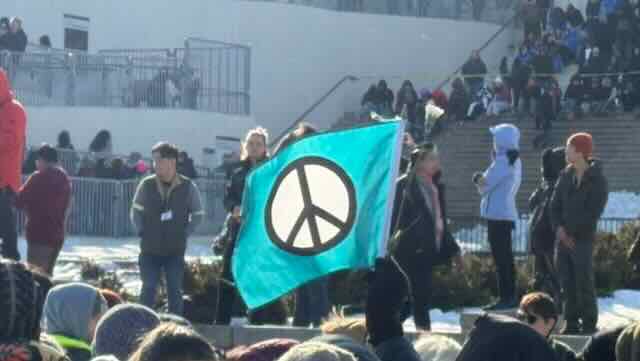
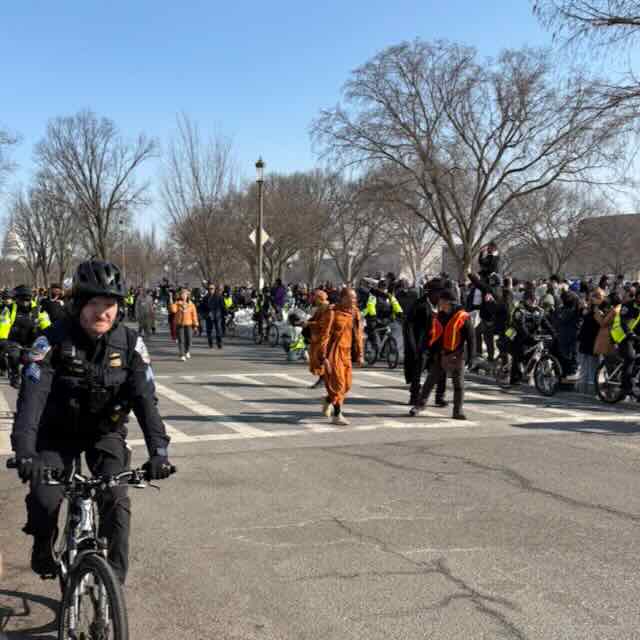
As I waited on Madison Drive NW outside the Smithsonian National Museum of Natural History, I was moved beyond tears at the sheer number of people standing in the cold to bear witness. The crowd continued to grow – lining both sides of the street – as we waited for the monks. The monks walked at a fast pace, flanked by police officers to keep the crowd off the street. Once they passed, I joined the walk for the last mile. I remember one woman telling me to “walk fast” as we began our journey to the Lincoln Memorial.
“This is the largest and most diverse crowd I have ever stood in front of” and “I will remember this moment for the rest of my life.” – Venerable Bikkhu Pannakara, leader of the Walk for Peace.
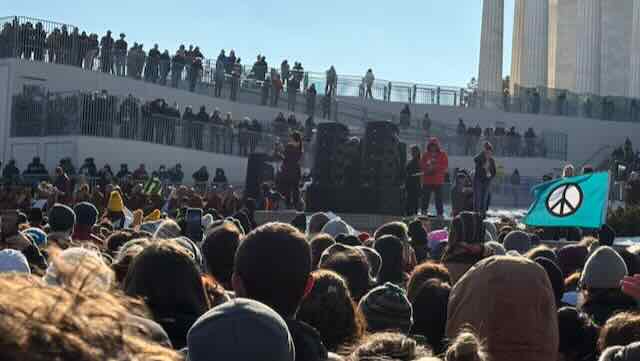
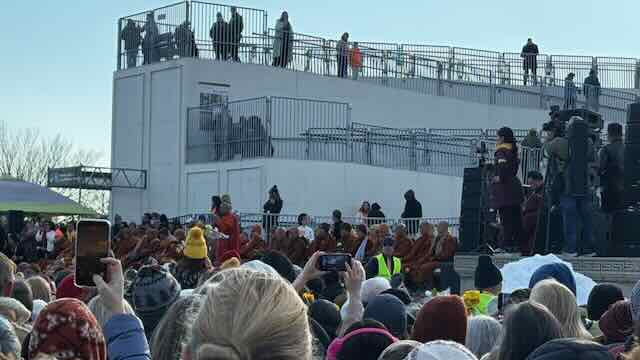
The Peace Gathering and Concluding Ceremony had several presentations from members of the Walk for Peace. Some offered prayers, some songs, some awards, and some teachings. There were several moments which were extremely moving throughout the program, and I have decided to share two.
Bhante Saranapala, a Buddhist monk based in Toronto, Canada, shared the following song as a call and response with the crowd.
May I be well
May I be happy
May I be peaceful
May I be free
May you be well
May you be happy
May you be peaceful
May you be free
May we be well
May we be happy
May we be peaceful
May we be free
At the end of the rally, the Venerable Bikkhu Pannakara shared and explained the five vows he had taken. These vows can be used to cultivate peace and slow our response to conflict.
Vow of Hope (Active Hope): Focuses on finding hope through active, loving engagement to bring about a better future.
Vow of Compassion: Commits to acknowledging suffering without contempt, offering help to those in need, and acting to alleviate suffering.
Vow of Loving-Kindness: Involves cultivating love and kindness toward all, reducing anger, and acting as a positive, non-judgmental presence.
Vow of Harmony: Focuses on resolving conflicts, speaking mindfully to avoid division, and fostering peace within our communities.
Vow of Love: Commits to seeing, connecting with, and supporting all beings.
He even provided these vows as a way to slow our response to conflict. Taking one second for each vow, breathing deeply into each vow, and then responding to conflict with loving kindness and compassion. This approach slows our reaction to conflict and reduces our own suffering and the suffering of others.
To observe thousands of people participating in the Walk for Peace, their associated events, and the Rally and Concluding Ceremony, was one of the most moving moments for me. Members of international Buddhist communities as well as members of our local communities braved a cold February day to walk, sing, breathe, meditate, and learn. These thousands of people coming together to promote peace, compassion, and nonviolence brought tears to my eyes and hope for our current time.
In the book Dinotopia by James Gurney, there are a set of codes by which the island’s citizens live by. One of those codes is “One raindrop raises the sea.” This statement is a philosophical belief that small, individual actions can have a direct impact on the collective. The suggestion is that even actions that seem insignificant can lead to significant collective change.
This week, I was that one raindrop – along with a large group of venerable Buddhist monks, volunteers, and thousands of other people. The sea of peace, compassion, and nonviolence is rising. I am sharing my experience with all of you in the hope that you may become a raindrop alongside those of us who elevated our collective consciousness over the past 109 days.
I closed my day full of hope – hope for the future, hope for positive, generative change, hope for our descendants, and hope for humanity.
One raindrop raises the sea, and today, I am that raindrop alongside thousands of people.
Will you join us?
About the Author

As a practitioner and healer in Washington, DC for more than a decade, I take a patient-centered approach to care through acupuncture, cupping, herbal medicines, and mind-body coaching, with a specialty in full-spectrum reproductive health care.